

At Sköna, we’re always looking for new ways to help brands communicate complex ideas.
Sometimes that means words. Sometimes it means design. And sometimes it means illustration.
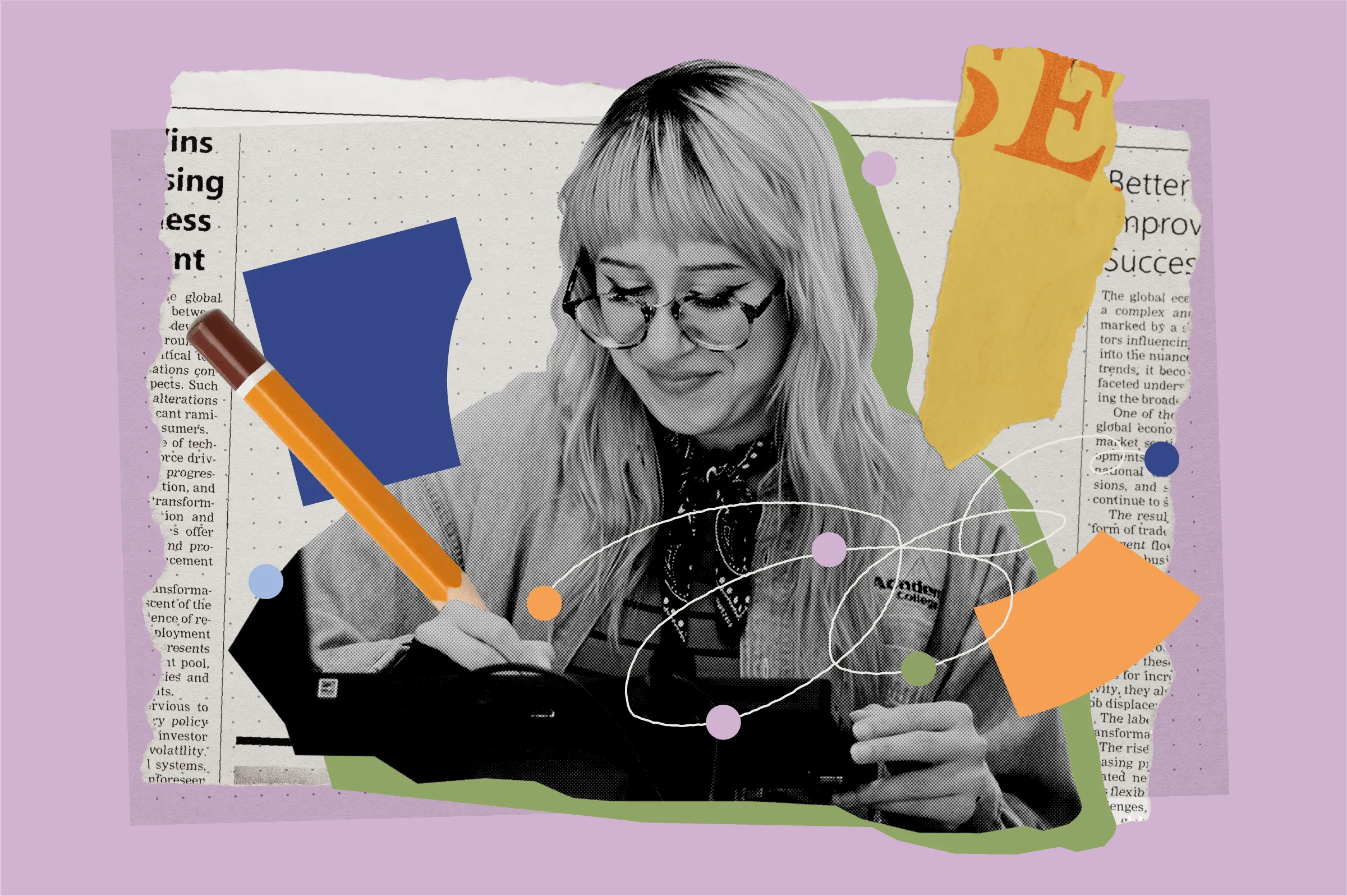
Our designer Gabi brings a unique perspective to our creative team. Before building brands and campaigns for B2B tech companies, and before bringing her chops to the recent Snowflake Olympics campaign and project, she studied illustration and spent years honing a craft that’s equal parts storytelling, problem-solving, and visual exploration.
We sat down with Gabi to talk about her creative journey, how illustration differs from design, and why the best visual ideas often come after the obvious ones.
Let’s start at the beginning. Were you always drawing?
Pretty much. My parents noticed really early on that I was constantly drawing. I was making little stories, creating flipbook animations on Post-it notes, and filling every spare piece of paper with doodles. My dad was a graphic designer, so he understood what I was interested in and encouraged it. No matter where we lived, I was always enrolled in art classes; drawing, painting, ceramics, printmaking, whatever I could get my hands on. By high school, everyone kind of knew this was going to be my thing.
Art was never really a hobby. It was just what I always wanted to do.
You studied illustration in college. Was that always the plan?
Not at first. I actually thought I wanted to go into animation because I loved anime growing up. But after taking animation classes, I realized how much work it takes to make things move. I remember thinking, “What’s the same thing, but without having to animate it?”
The answer was illustration. I went to the Maryland Institute College of Art (MICA) as an illustration major, but honestly, I spent most of college wanting to try everything. Painting, printmaking, fine arts – I loved all of it.
How did you end up becoming a designer?
Kind of by accident. I started out as an illustrator and eventually joined Dropbox as a graphic designer. At first, I thought design felt too structured compared to illustration. But over time, I started learning more about web design, UX, and systems thinking. I realized there were opportunities to bring my illustration background into design work. Eventually, it became a practical decision too. It’s difficult to build a stable career doing only illustration. Design opened more doors while still allowing me to bring that creative perspective.
Do you think like a designer or an illustrator?
Both, and sometimes they fight each other. As an illustrator, you’re taught not to go with the first idea. You’re always pushing for something more interesting, more unexpected. As a designer, sometimes the first idea is the right idea because people need to understand it immediately. So there’s definitely tension there. One side of my brain is saying, “Keep exploring.” The other is saying, “Make it clear.”

What’s your process when you’re starting an illustration project?
Research first. I want to understand the topic, the audience, and what the client is trying to communicate. Then I start taking notes and thinking through visual metaphors. Most illustration is really about explaining something. Especially in tech. You’re constantly asking yourself: What’s a visual way to communicate this idea? And then you’re trying not to use the same symbols everyone else would use.
So you’re actively avoiding clichés?
Definitely. If someone says “security,” most people immediately think of locks, keys, shields, that kind of thing. My first question is usually: What else could this be? That’s the fun part.
Is illustrating for B2B tech harder than people realize?
Absolutely, a lot of the concepts are incredibly abstract. You’re not drawing a product. You’re drawing ideas like cloud infrastructure, data governance, AI, or cybersecurity. Those things don’t naturally have a visual form. That’s where illustration becomes problem-solving.
What do people misunderstand about illustration?
How much work goes into it. Sometimes people see a rough sketch and think, “Why isn’t it finished yet?” But illustration is a process of constant refinement. You’re sketching, revising, adjusting composition, exploring color, reworking details. And if something changes late in the process, it can mean rethinking a lot more than people realize.
You’ve done illustration work for Sköna clients like Snowflake. What’s that experience been like?
It’s been really fun. One thing I appreciate is that some tech companies are willing to be a little more playful. Snowflake is a good example. Even though they’re a huge enterprise company, they’re open to using illustration in ways that add personality and character. I think that’s where illustration really shines.

How would you describe your illustration style?
Playful, bold, colorful, and expressive. I love texture. I love imperfect shapes. I love making digital work feel like it was made by hand. I don’t want things to feel overly polished; I want them to feel human.
Where do you find inspiration?
Pinterest and Instagram are probably the biggest sources. But I’m also constantly looking at older illustration and graphic design work. I love pre-digital design because there was so much attention paid to composition, color, and craft. A lot of my inspiration comes from asking: How can I bring some of that feeling into modern work?
What’s something you’d like to see more companies embrace?
Taking creative risks. A lot of brands use illustration because it’s trendy, but they’re still playing it safe. The companies that get the most out of illustration are the ones willing to trust artists, invest in the work, and let it evolve into something distinctive.
Last question: What advice would you give aspiring illustrators?
Try everything! Learn the tools. Learn the craft. Learn how to take feedback. And don’t be too precious about your work. Getting comfortable with critique is probably one of the most important skills you can develop. Especially today. With AI, changing technologies, and shifting expectations, the people who continue to grow are the ones who stay curious.
AI is a tool. It’s not a replacement. What people connect with is still the human perspective behind the work.
Whether she’s designing a campaign, building a visual system, or sketching out a new illustration, Gabi approaches every project with the same mindset: stay curious, keep exploring, and don’t settle for the first idea.
We’re so fortunate to have her and that perspective here at Sköna.
Share